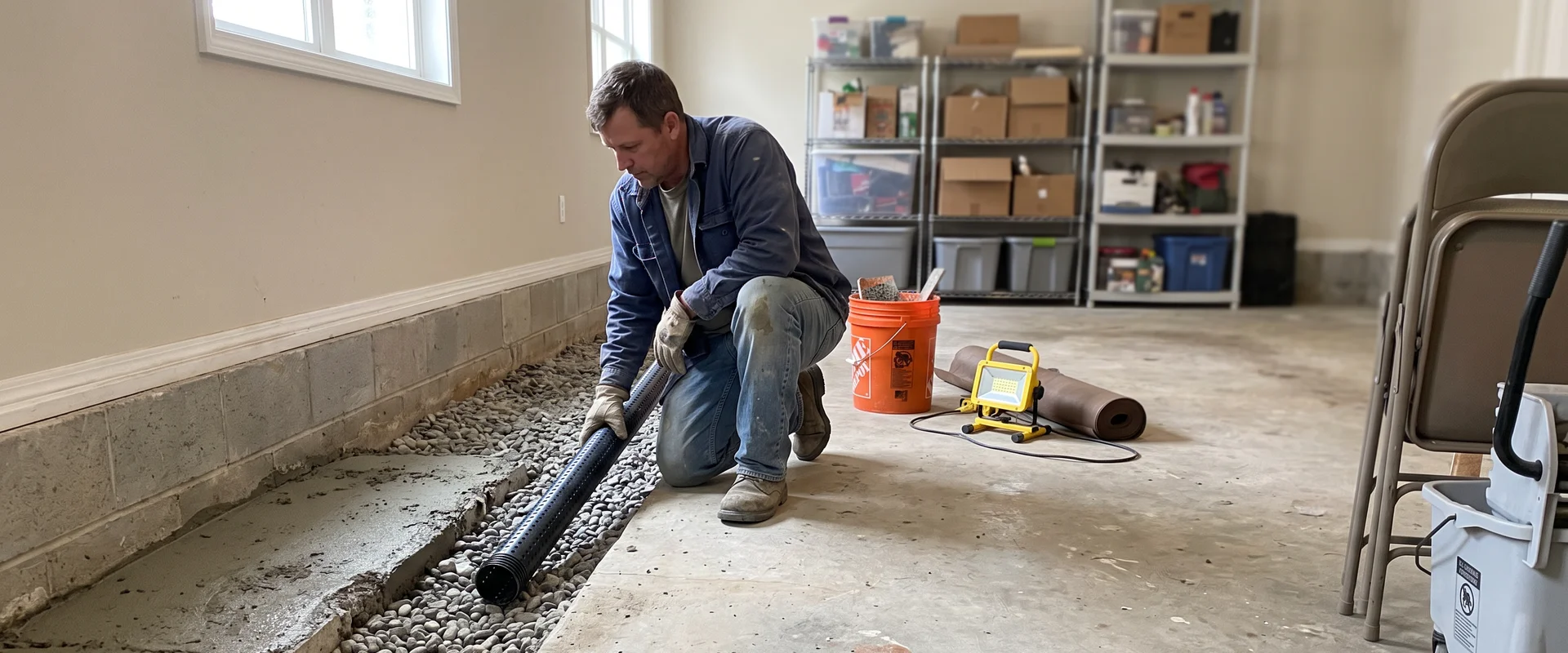
Technician installing an interior French drain channel along a basement wall
verified Storm Season Ready

Keep Your Atlanta Basement Dry, Year-Round

Interior drainage, sump pumps, and dehumidification to end wet and leaking basements.

31+
Years in Georgia
4.8
Google rating
Free
In-home inspection
Transferable
Life-of-structure warranty
star 4.8 Google rating, thousands of reviews
workspace_premium Life-of-Structure Transferable Warranty
schedule Free In-Home Inspection
task_alt 26,450+ crawl spaces repaired

Have you ever walked downstairs after a heavy summer storm and felt that sudden dread of finding a puddle on your basement floor?

That sinking feeling is something nobody wants to experience.

We hear from Georgia homeowners every week who are dealing with this exact frustration.

It is completely understandable to feel overwhelmed by water issues.

Our team at Basement Waterproofing Atlanta focuses on high-quality foundation repair and waterproofing services that protect the structural integrity of your home.

You will quickly see how simple the right solutions can be.

We are going to walk you through the exact steps to keep your lower level perfectly dry.

Grab a cup of coffee, and let’s go through it together.

What Is Basement Waterproofing?

Basement waterproofing is essentially about water management rather than just water sealing.

Atlanta sees an average annual rainfall of about 50 inches based on climate data, which means massive amounts of water regularly soak into the ground.

When the Piedmont red clay around your foundation saturates after a heavy Georgia storm, it presses inward and upward against your walls and slab.

We refer to that force as hydrostatic pressure.

It is incredibly strong, pushing water right through the cove joint where the wall meets the floor, through shrinkage cracks, and straight through the pores of concrete block.

Our approach avoids sealants and waterproof paint that just try to hold pressure back from the inside.

Those quick fixes blister and fail within a season or two because they do not address the root cause.

Here are the key differences between the two methods:

  • Surface Sealants: They trap moisture inside the block, leading to rapid blistering.
  • Hydrostatic Pressure: No paint can hold back the weight of saturated Georgia clay.
  • Interior Drainage: This method actively relieves pressure by moving water away safely.

A 2024 Forbes report notes that the average cost to repair a flooded basement in the US is around $4,300, with severe cases topping $15,000.

We want to help you avoid those painful unexpected bills.

An interior drainage system takes the opposite approach by giving the water somewhere to go safely.

Our installation crew places a specialized channel at the slab edge to collect water exactly at the point where it enters.

This system carries the moisture around the perimeter and delivers it to a sealed sump basin.

We then rely on a submersible sump pump to lift the water out and send it through a discharge line.

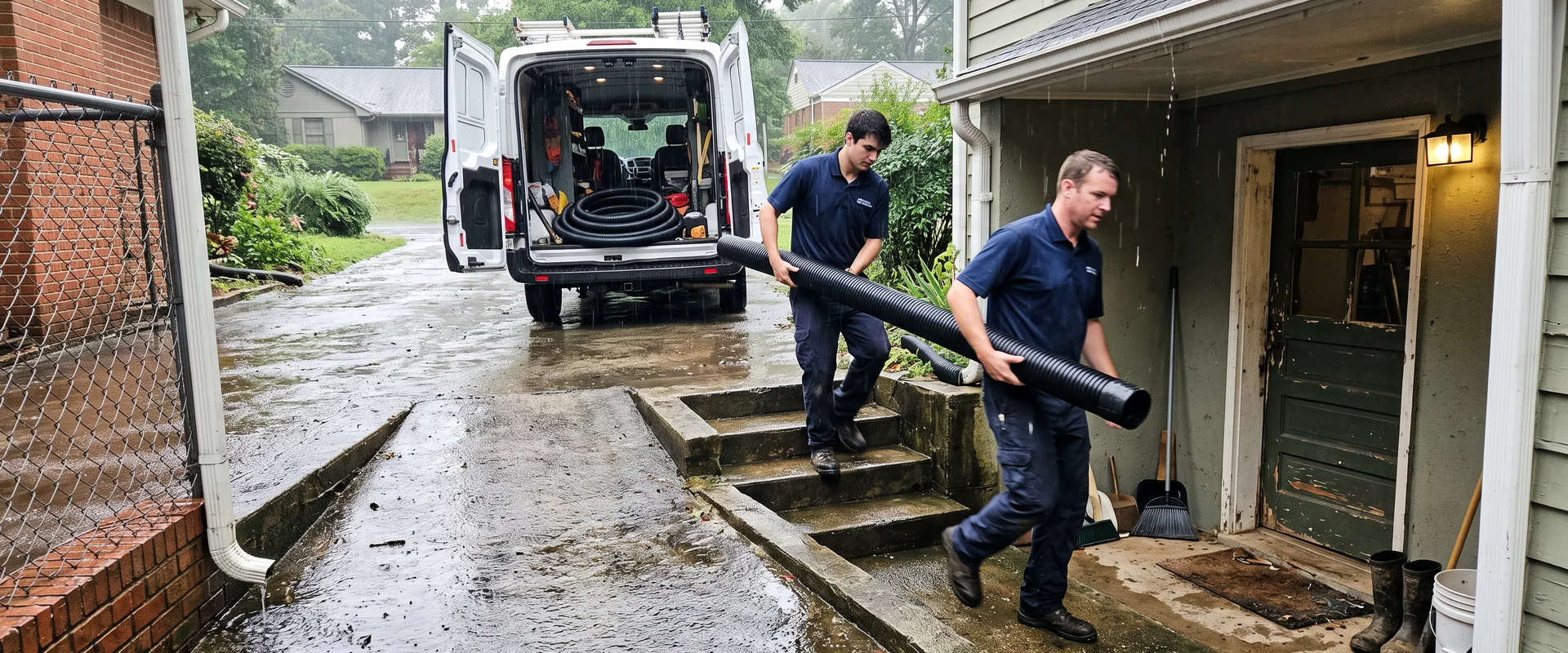
The line routes the water well clear of your footings, or to a gravity outfall discharge line where the lot slopes away.

MethodHow It WorksLong-Term Effectiveness
Interior SealantsTraps water inside wallsFails quickly under pressure
Interior DrainageRedirects water out safelyPermanent solution

For block walls, we drill weep holes at the base of the cores so trapped water inside the wall drains into the channel instead of sitting there and pushing through the face.

A wall vapor barrier is installed over the wall surface and tucked into the channel, ensuring seepage runs down behind it rather than across your floor.

Our team knows the last piece of the puzzle is air quality.

A basement can have a perfectly dry floor and still smell musty because relative humidity is sitting above 60%.

We always explain that this humidity level is enough to feed mold on stored boxes, framing, and drywall paper.

Where readings justify it, we size a high-capacity dehumidifier so the space stays in the range where mold cannot establish.

If you plan to finish the lower level, that step is absolutely required.

Common Problems We Solve

Every home is different, but the symptoms of a failing foundation tend to follow a familiar pattern.

We see the same handful of issues repeatedly across Greater Atlanta.

Water along the cove joint

The seam where the wall meets the floor is the most common entry point in metro Atlanta basements.

It is a construction joint rather than a sealed one, and saturated soil pushes water directly through it.

Our perimeter drainage systems intercept this water before it ever reaches your floor.

By relieving the pressure at the cove joint, you stop the problem right at the source.

Efflorescence and damp block walls

That white chalky residue is mineral salt left behind by water evaporating out of the wall.

It tells you water is moving through the block even when no puddle forms.

We use weep holes and a dedicated vapor barrier to redirect this trapped moisture safely.

You will immediately notice a difference in how the walls look and feel.

A sump pump that cannot keep up

Undersized pumps, clogged discharge lines, and systems with no backup all fail on the exact same night.

The worst storm of the year is usually the one that knocks the power out.

Our technicians size your new pump for the actual water volume of your specific lot.

A 2026 industry review by AAA Standard Services found that about 40% of all sump pump failures occur simply because of power outages.

We always add a reliable battery backup system where the basement matters.

This ensures your home stays dry even when the neighborhood goes dark.

Musty air and high humidity

Relative humidity control is exactly what stops the awful smell.

Drainage removes liquid water, while a dehumidifier removes the vapor that is left behind.

We closely follow the US Environmental Protection Agency (EPA) guidelines, which strongly recommend keeping indoor humidity between 30% and 50%.

Mold can start growing within 24 to 48 hours when humidity spikes past 60%.

Our combination of drainage and humidity control makes the space truly usable rather than merely dry underfoot.

You can finally store your belongings without worrying about mildew ruining them.

Why Water Management Starts Outside

The cheapest gallon of water to control is the one that never reaches your footing.

Before designing a system, your inspector checks the perimeter footing drain if one exists, looks at grading, and inspects gutters and downspout extensions.

We always remind homeowners that a typical 1,000-square-foot roof sheds roughly 623 gallons of water during a single inch of rain.

Overflowing gutters dump all that concentrated water right where you least want it.

Here are the top exterior factors to evaluate:

  • Downspout Length: Ensure they extend 6 to 10 feet from the house.
  • Gutter Capacity: Check for clogs that cause overflow during heavy rain.
  • Yard Grading: Verify that the soil slopes away from your foundation walls.

Our team follows the National Association of Waterproofing and Structural Repair Contractors guidelines, which recommend extending downspouts a minimum of 6 to 10 feet away from the foundation.

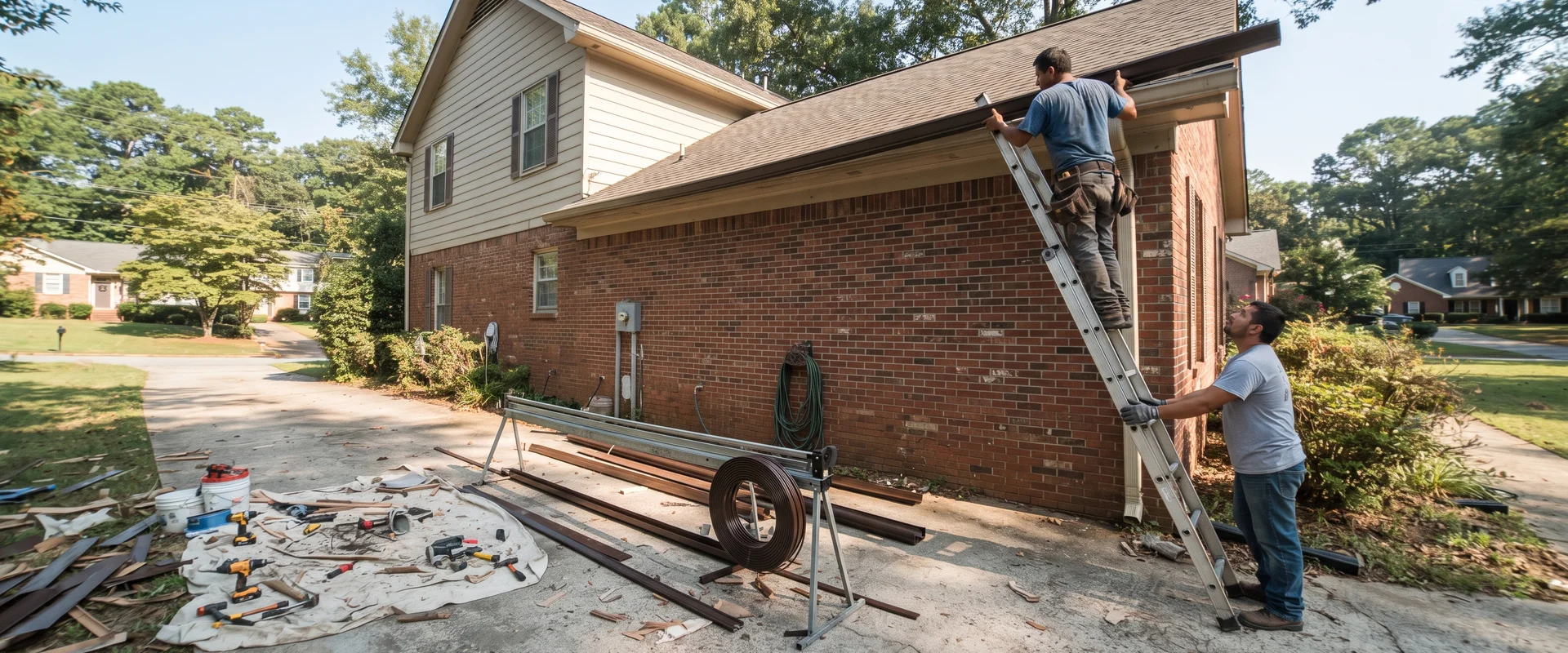
This is exactly why gutter services and waterproofing so often get quoted together.

If your home has a crawl space rather than a full basement, the same physics apply with different symptoms.

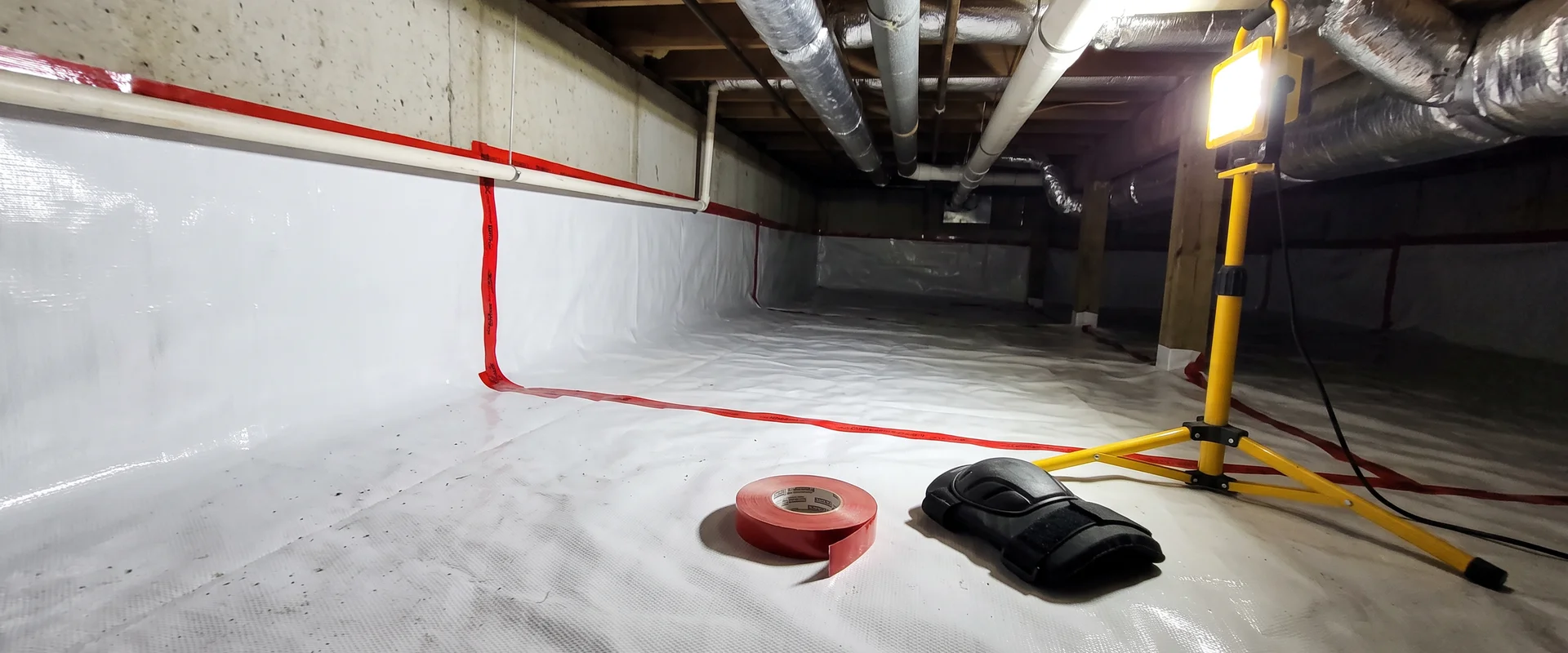
In these cases, crawl space encapsulation is usually the right system to fix the issue.

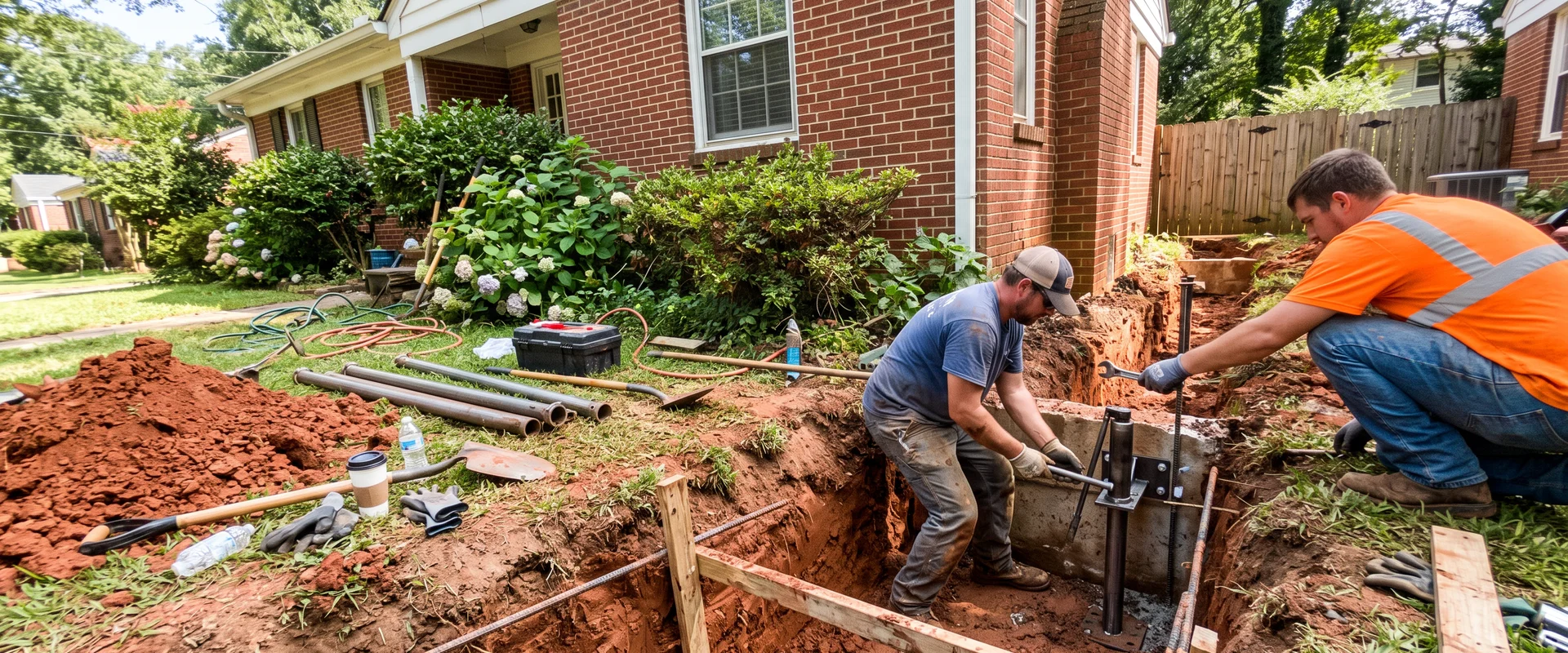
We often pair waterproofing with foundation repair where wall movement has already started.

The structural fix must not be undone by the exact same water that caused the problem in the first place.

Every system provided carries a fully transferable warranty for your peace of mind.

The inspection that tells you what you actually need is completely free.

Our team sends a certified field inspector to evaluate your home rather than a salesperson working on commission.

You will get an honest assessment and a clear plan to protect your property.

We encourage you to contact us today to schedule your free inspection and take the first step toward a dry, healthy home.
How Much Does Waterproofing Cost in Atlanta?

Waterproofing is priced per project because linear footage of drainage, pump requirements, and discharge routing all vary by home. Your free in-home inspection produces a written breakdown, and financing is available.

Targeted Seepage Repair

For a single leaking crack or one problem wall with limited water.

Smallest scope
  • check Free certified inspection with moisture mapping
  • check Crack sealing or localized drainage
  • check Discharge and grading recommendations
Get Your Exact Price

Perimeter Drainage System

Most common

The standard fix for recurring basement water in metro Atlanta homes.

Mid scope
  • check Interior drainage channel around the affected perimeter
  • check Sealed sump basin with submersible pump
  • check Wall vapor barrier directing seepage into the channel
  • check Transferable warranty
Get Your Exact Price

Full Dry Basement System

Drainage plus redundancy and humidity control for finished or planned-finished space.

Full scope
  • check Complete perimeter drainage and vapor barrier
  • check Battery backup sump pump for power outages
  • check High-capacity dehumidifier with humidity control
  • check Transferable warranty
Get Your Exact Price

What Changes the Price

  • arrow_right Linear feet of interior drainage needed around the perimeter
  • arrow_right Whether a new sump basin and pump are required, and pump capacity
  • arrow_right Battery backup or secondary pump for storm redundancy
  • arrow_right Discharge routing distance and whether gravity outfall is possible
  • arrow_right Wall vapor barrier coverage and dehumidifier sizing

Every quote is project-based and set after a free in-home inspection. Financing is available if you would rather spread the cost.

Why Choose Us for Waterproofing

water_drop

Pressure relief, not sealant

Paint-on sealers fail because hydrostatic pressure keeps pushing. Interior drainage gives the water a path to a sump instead of your floor.

verified_user

Storm-grade redundancy

Georgia storms knock power out exactly when the pump matters most. Battery backup systems keep pumping through the outage.

schedule

Humidity handled too

A dry floor with 70% relative humidity still grows mold. We size dehumidification alongside drainage so the space is genuinely usable.

map

Full-envelope thinking

Your inspector checks gutters, downspout extensions, and grading, because water managed at the roofline never becomes hydrostatic pressure at the footing.

How Our Waterproofing Work Goes

01search

Free inspection

We trace where the water actually enters, check the cove joint, look for efflorescence, and take relative humidity readings throughout the basement.

02assignment

System design

You get a written plan: drainage layout, pump sizing, discharge route, and whether a dehumidifier or backup pump is worth it for your home.

03engineering

Installation

Crews cut and trench the slab edge, set the drainage channel in washed stone, install the basin and pump, and tie in the wall vapor barrier.

04task_alt

Test and hand over

We flood-test the system, confirm the discharge line runs clear of the foundation, and hand over your warranty paperwork.

Our Waterproofing Work

See the Difference

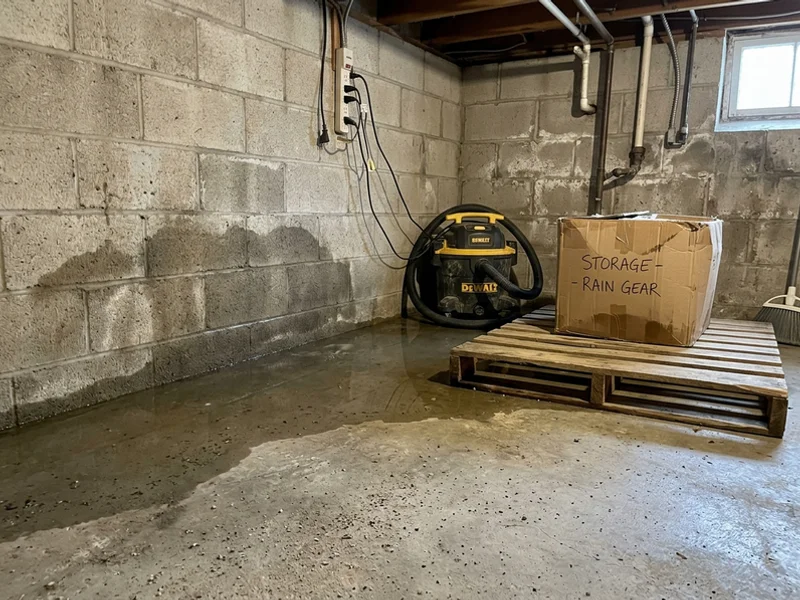
Before waterproofing Before
Before waterproofing
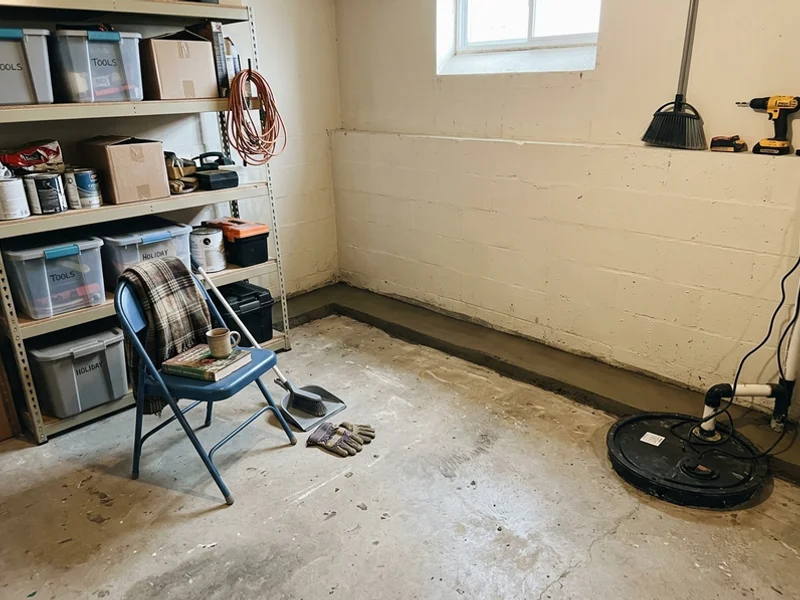
After waterproofing After
After waterproofing

Waterproofing on a metro Atlanta home

How Basement Waterproofing Atlanta Compares

Feature Typical provider Basement Waterproofing Atlanta
Approach Sealants and waterproof paint Interior drainage that relieves hydrostatic pressure
Pump redundancy Single pump, no backup Battery backup available for outages
Humidity control Not addressed Dehumidifier sized with the system
Warranty Short-term, non-transferable Transferable warranty
Inspection Quoted over the phone Free on-site moisture mapping

What Customers Say About Our Waterproofing Work

star star star star star 4.8 from 1,200+ reviews
starstarstarstarstar

"Our basement flooded every spring. They installed an interior drain and sump pump with a backup, and we haven't seen a drop of water since. The inspector explained everything without any pressure."

Michael R. — Marietta

verified Verified homeowner review

starstarstarstarstar

"We had water along the cove joint every heavy rain. The crew was in and out in two days, and the lower level is finally dry enough to finish."

Sandra K. — Smyrna

verified Verified homeowner review

starstarstarstarstar

"The battery backup earned its keep during the first big storm outage. Power was out four hours and the pump never stopped."

Robert H. — Peachtree Corners

verified Verified homeowner review

Waterproofing FAQs

Why does my basement only leak after heavy rain?

expand_more

Because the trigger is hydrostatic pressure, not the rain itself. Piedmont red clay absorbs water slowly and holds it, so after a soaking storm the soil around your foundation stays saturated for days. That saturated soil presses against the walls and up under the slab, and water is forced through the cove joint where wall meets floor, through wall cracks, and through porous block. Once the soil drains, the pressure drops and the leak stops until the next storm.

Is interior drainage better than digging up the outside?

expand_more

For most Atlanta homes, yes. Exterior excavation means removing landscaping, decks, and sometimes driveways to reach the footing, which multiplies cost and disruption. An interior perimeter system reaches the same water at the same point of entry from inside, installs in days rather than weeks, and is far easier to service later. Exterior work makes sense for specific structural or grading problems, and your inspector will say so if that is your situation.

How long does a sump pump last?

expand_more

A quality submersible pump typically runs eight to ten years, though cycle frequency matters more than age. A pump in a home with a high water table runs constantly and wears faster. We recommend testing yours each spring by pouring water into the basin, and adding a battery backup if your basement is finished or you store anything of value down there.

What is that white chalky residue on my basement wall?

expand_more

Efflorescence. Water moving through concrete or block dissolves mineral salts, and when the water evaporates on the interior face those salts are left behind. It is not harmful on its own, but it is direct evidence that water is passing through the wall, which means moisture is entering your basement air even when you cannot see a puddle.

Will waterproofing fix the musty smell?

expand_more

Drainage alone usually improves it but does not finish the job. Musty odor comes from elevated relative humidity feeding mold and mildew on stored items, framing, and drywall. Keeping humidity below roughly 55% is what stops it, which is why we size a dehumidifier alongside the drainage system when readings justify it.

Where does the water get discharged?

expand_more

Away from the foundation, which sounds obvious but is where a lot of systems fail. Where the lot allows, we use a gravity outfall discharge line that daylights downhill. Otherwise the pump discharges through a line routed well clear of the footings. Discharging next to the foundation just recycles the same water back into the soil you are trying to drain.

Can I finish the basement after waterproofing?

expand_more

That is the goal for a lot of our customers. Once drainage, a vapor barrier, and humidity control are in place, the space holds stable conditions suitable for finishing. We recommend finishing after the system has run through at least one heavy-rain cycle so you can confirm performance before framing over the walls.

Do you handle weep holes in block walls?

expand_more

Yes. Hollow block walls fill with water internally, and that trapped water eventually finds a way through the face of the wall. Weep holes drilled at the base of the cores release it directly into the perimeter drainage channel, which keeps the wall from staying saturated year-round.

Still have questions?

A certified inspector can look at your home and answer them in person. The inspection is free and there is no obligation.

Book a Free Inspection

Ready to Book Waterproofing?

Free in-home inspection, transparent project-based pricing, and a transferable warranty on basement waterproofing.

  • verified Transferable life-of-structure warranty
  • engineering Certified inspectors, not sales reps
  • payments Transparent pricing with financing options
event_available Book a Free Inspection