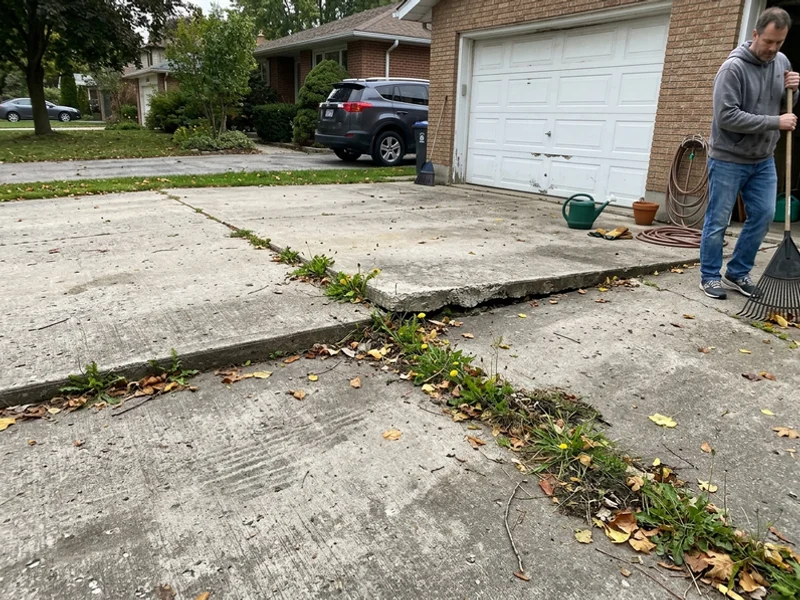
Have you noticed that uneven spot on your driveway where the concrete is sinking?
Our team at Basement Waterproofing Atlanta knows exactly how frustrating these sunken slabs can be for your family. The sinking makes pulling the car in feel like hitting a massive pothole.
A simple process called Concrete Lifting & Leveling is the best way to fix this issue quickly. We use this proven method to raise sunken slabs right back to their original elevation.
This guide will walk you through the exact steps involved in the process. The speed of this repair is truly surprising.
What Is Concrete Lifting & Leveling?
Concrete lifting raises a sunken slab back to its original elevation by filling the empty space underneath it. The slab itself is usually completely fine.
Our technicians constantly see issues caused by the local Georgia ground. The deep Piedmont red clay, known locally as the Cecil soil series, shrinks up to 10-15% in volume during a dry summer.
This dramatic volume change creates severe problems for your property:
- It pulls the earth right away from your footings.
- It opens large hidden voids beneath the surface.
- It leaves the heavy concrete completely unsupported.
We often repair these issues right after the concrete cracks and drops. The PolyRenewal system offers a smart fix for these specific local conditions.
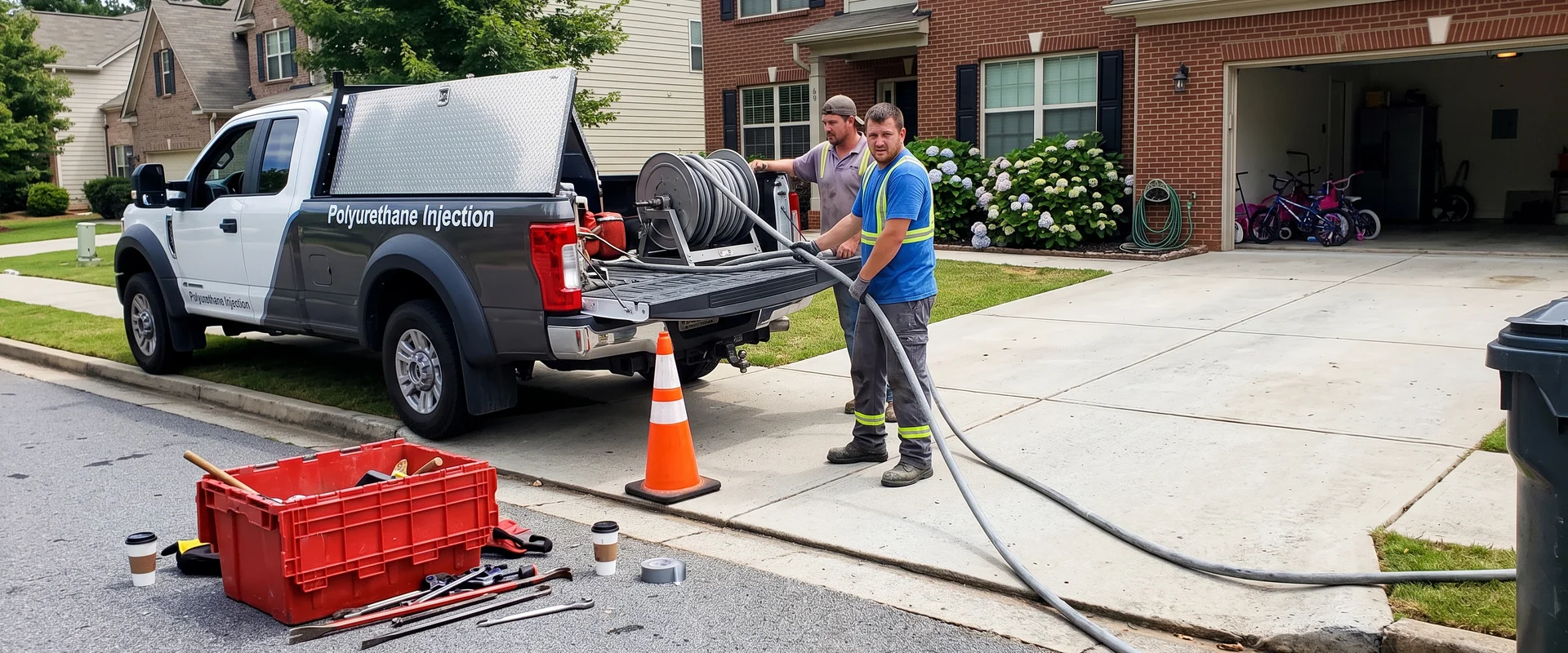
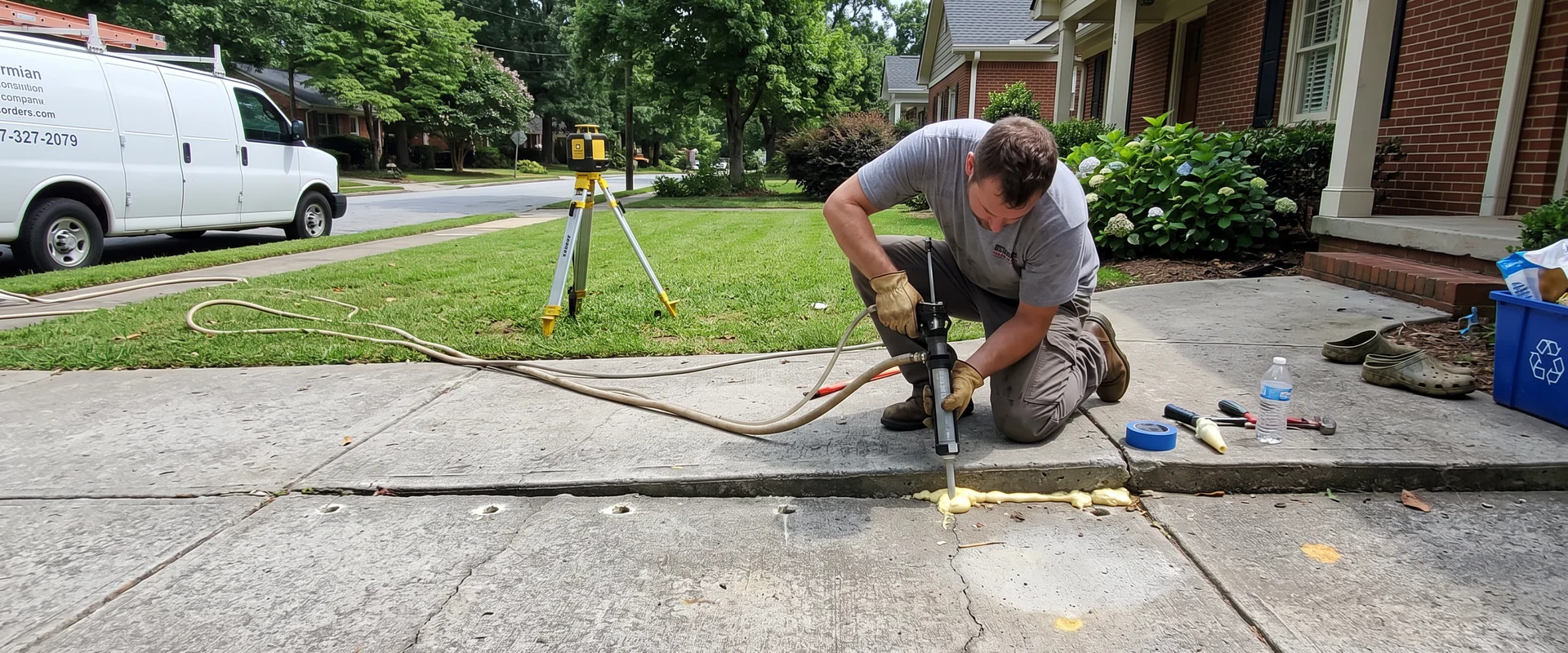
Our team solves this by injecting a high-density geotechnical polyurethane foam through ports about the size of a penny. The expanding foam fills the empty space completely.
This modern material provides solid soil compaction against the surrounding earth. Our crew monitors the slab elevation in real time to ensure perfect alignment.
| Feature | Polyurethane Foam | Traditional Mudjacking | Full Replacement |
|---|---|---|---|
| Weight | Extremely light (1/50th of mudjacking) | Heavy cement slurry | Requires heavy machinery |
| Cure Time | 15 minutes | 1 to 5 days | Weeks for demolition and curing |
| Hole Size | 5/8 inch (penny-sized) | 1 to 2 inches | Complete demolition |
The polyurethane foam reaches full load-bearing strength in roughly fifteen minutes. This lightweight foam actually weighs 1/50th of the heavy slurry used in older methods. We recommend this modern approach because it will not burden your soil with excess weight.
Full replacement requires expensive demolition, messy disposal, and weeks of curing time. Traditional mudjacking pumps a heavy cement slurry through large two-inch holes. Our clients prefer polyurethane because it fixes the issue cleanly without creating new problems.
There is a highly practical angle beyond basic property appearance. A driveway or pool deck settled toward the house redirects storm runoff straight at your foundation. Our waterproofing experts know that this standing water creates massive hydrostatic pressure.
That constant pressure pushes directly into basements and keeps crawl spaces uncomfortably humid.
Recent 2026 industry data shows that fixing severe water damage in a finished basement can easily cost up to $16,000 on average.
We help you avoid these massive repair bills by restoring a positive slope away from your house. This simple step is genuine water management for your property.
Common Problems We Solve
Many homeowners ignore sinking concrete until it becomes an undeniable safety issue. Our staff receives frantic calls every week from people who tripped or noticed major water pooling. A quick inspection can identify these hazards before they cause expensive damage.
Trip hazards at slab joints
An uneven sidewalk panel dropping an inch at the control joint is a very common issue. This raised edge is incredibly urgent because it creates a severe liability right at the front door.
Our safety specialists always remind clients about current compliance laws. The Americans with Disabilities Act strictly defines any vertical change of 1/4 inch or greater as a serious trip hazard.
The federal government actively enforces this 1/4-inch rule in 2026 to prevent dangerous falls. We can quickly lift that sunken panel back into perfect alignment to protect your guests.
Sunken driveways and garage aprons
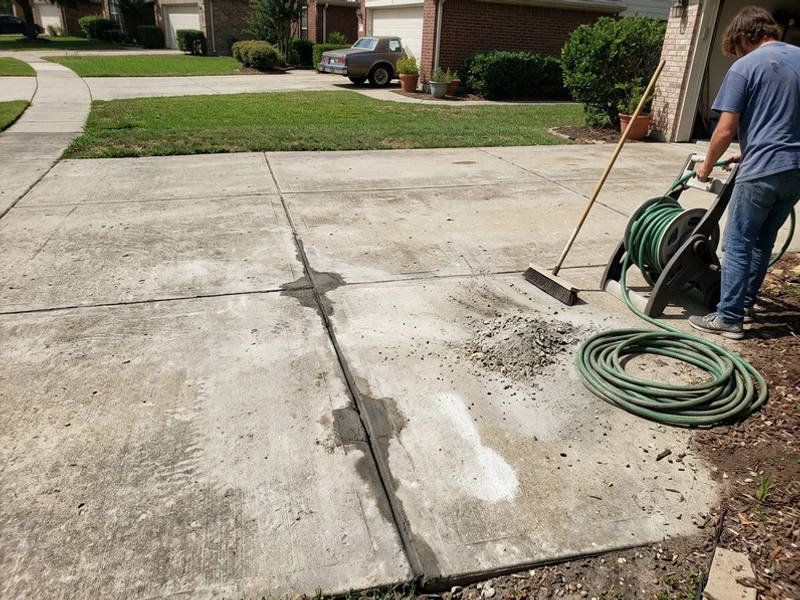
The apron at the garage door usually settles first because it sits on the most disturbed fill dirt. Left alone, this area cracks further and lets heavy rain run right under the slab.
Our repair crews frequently find driveways dropping several inches over just a few years. This deep gap jars your car’s suspension every single time you pull in.
A smooth concrete transition protects your vehicles from unnecessary daily wear. We use durable polyurethane foam to permanently stabilize these heavy-traffic zones.
Pool decks pitched the wrong way
Settled pool deck sections gather water and send it straight toward the house instead of away. Lifting corrects both the standing puddles and the entire drainage direction.
Our technicians see how quickly this trapped moisture degrades nearby foundation walls. Puddles around a pool also create a slippery nightmare for wet feet.
Properly leveled concrete ensures that splashed water flows harmlessly off into your yard. We provide a clean finish that restores the safety of your outdoor spaces.
Interior and garage floor slabs
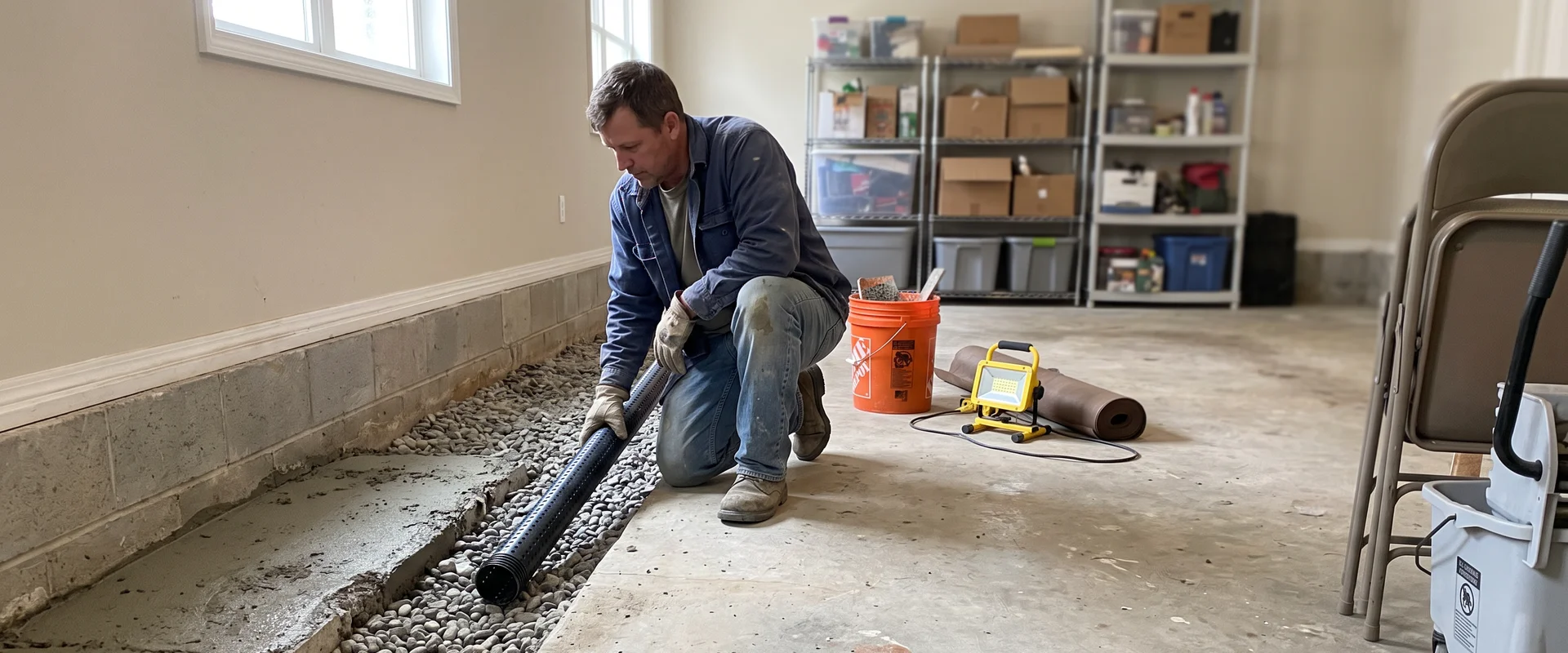
Basement slabs and interior garage floors frequently require lifting too. The low-mess nature of polymer injection makes indoor residential work incredibly practical.
Our team completes these interior projects without tracking mud or heavy equipment through your home. A level basement floor provides the perfect foundation for new carpets or laminate planks.
Sunken garage floors can actually trap toxic vehicle fluids and cause terrible odors. We seal those underlying voids to give you a perfectly flat and clean surface.
When Lifting Is Not the Right Answer
Concrete leveling works miracles, but certain situations demand a full replacement. A simple foam injection will not solve every single driveway issue. Our inspectors will always give you an honest recommendation when a brand new pour is required.
Here are the clear signs that your concrete needs a replacement instead of a lift:
- Surfaces that have spalled badly or crumbled into gravel.
- Slabs shattered into multiple separate pieces.
- Paving poured less than three inches thick.
These thin or brittle concrete layers often crack under the upward pressure of the expanding polyurethane. We want your repair to last, so a demolition is the smartest choice for weakened surfaces.
A successful repair must also look far beyond the concrete itself. A soil void caused by continuous water runoff means that lifting is just a temporary treatment. Our technicians search for the root cause to ensure the underlying problem never returns.
Constant erosion and soil movement point to several companion scopes of work:
- gutter services to safely control heavy roof runoff.
- Downspout extensions to move water at least six feet away from the patio.
- Major yard grading corrections to stop surface dirt from washing away.
- foundation repair to secure main support walls compromised by expanding Cecil clay.
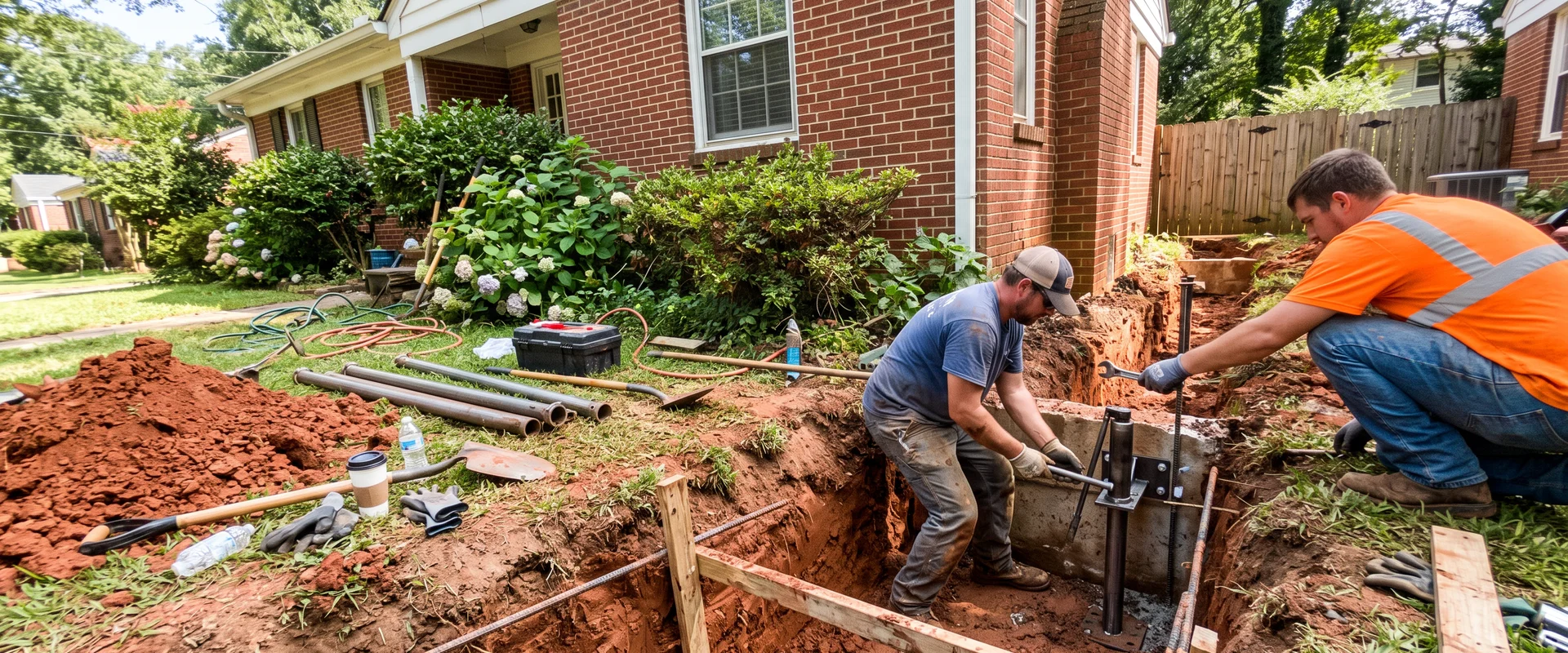
A severely dropped footing requires heavy-duty steel piers rather than just surface foam. Proper Concrete Lifting & Leveling is a fantastic tool, but your inspector will flag these deeper issues during the free visit. We always provide a comprehensive view of your property’s complete structural health.