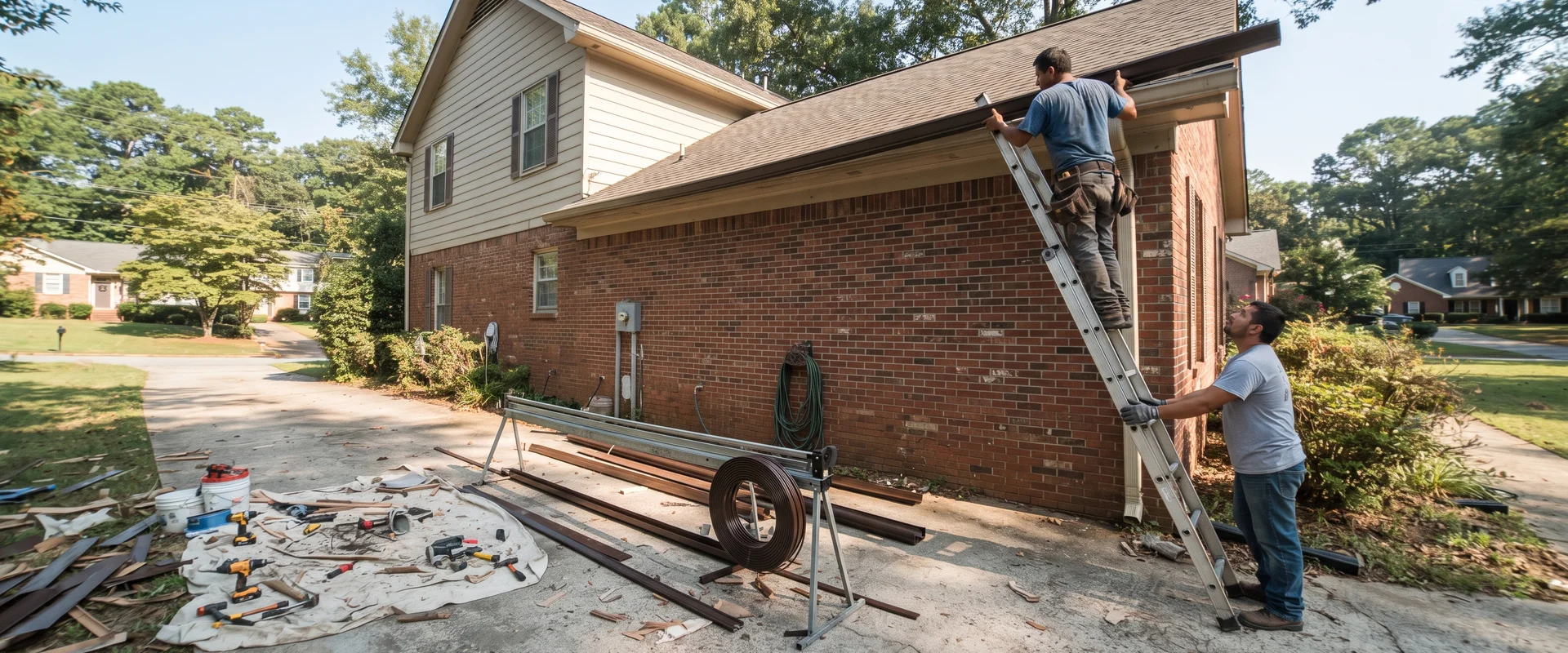
Installer fitting a one-piece covered gutter system along the roofline of an Atlanta home
verified First Line of Defense

Route Water Away From Your Foundation

GutterShutter covered gutters and replacement to protect your foundation from water.

31+
Years in Georgia
4.8
Google rating
Free
In-home inspection
Transferable
Life-of-structure warranty
star 4.8 Google rating, thousands of reviews
workspace_premium Life-of-Structure Transferable Warranty
schedule Free In-Home Inspection
task_alt 26,450+ crawl spaces repaired

Have you ever watched a heavy Georgia summer storm and wondered where all that water actually goes?

It is easy to assume the ground simply absorbs it all. We know how stressful it can be to find unexpected water pooling in your yard.

You might be surprised to learn that a dry basement actually starts at your roofline. Grab a cup of coffee, and let’s go through exactly how this works together. Our team at Basement Waterproofing Atlanta is dedicated to providing high-quality foundation repair and waterproofing services designed to protect your home’s structural integrity.

Why Gutters Are a Foundation Service

It seems like a stretch to link your gutters to your foundation until you do the basic arithmetic. During a single intense storm, a standard roof sheds thousands of gallons of water. We check local weather data constantly, and Atlanta averages roughly 50 inches of rain every year.

Gutters exist to collect that massive volume and move it somewhere sensible. Almost all of that water dumps into the backfilled dirt hugging your home when those channels clog or sag. Our crews always point out that this specific dirt is the most absorbent ground on your entire property.

Expansive clay soil swells when wet and shrinks when dry, cracking more Georgia foundations than almost anything else.

Georgia is famous for its Piedmont red clay, specifically the Cecil soil series. This expansive clay acts like a sponge, swelling 10% to 15% in volume when saturated. We frequently find this swollen soil pressing violently against basement walls and footings.

Engineers call this hydrostatic pressure, and it is the hidden force behind bowing block walls. It also creates the constant moisture that keeps crawl spaces miserably humid all summer long. Our specialists see the domino effect of this pressure every single day.

  • Soil erodes out from under driveways until they crack and sink.
  • Patios slowly drop into the yard as the base washes away.
  • Basement seepage becomes a stressful, recurring nightmare.

The roofline is absolutely the cheapest and most effective place to intervene. Water controlled up there never gets the chance to become a pressure problem below grade. We call this full-envelope water management, and it is the core of what we do.

This is exactly why the GutterShutter one-piece covered system is so highly recommended. Open gutters simply fill up with pine straw and oak leaves much faster than anyone wants to clean them. Our team loves how this system perfectly handles the unique challenge of our dense, local tree canopy.

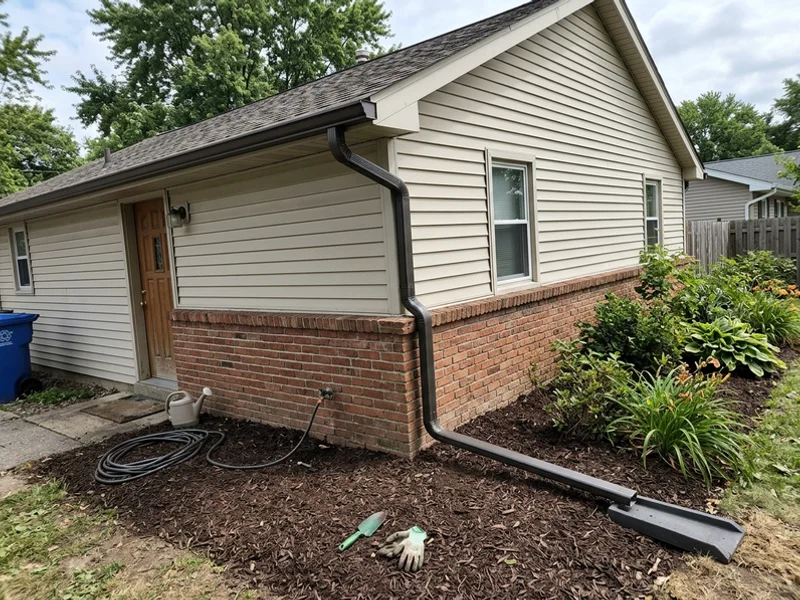
Proper downspout extensions are required to finish the job correctly. A perfectly functioning gutter that dumps water right at the corner of your house just relocates the problem four feet away. We use extensions to carry that flow past the backfill zone to a safe drainage discharge point.

Common Problems We Solve

Atlanta’s beautiful trees and intense climate create a perfect storm for drainage failures. Catching these issues early can save you from a massive repair bill down the line. We encounter the same few expensive mistakes on almost every property we visit.

A recent check of 2026 industry data shows average foundation repairs in Atlanta range from $4,500 to $12,000. Fixing your gutters is pennies compared to lifting a sunken house. Our technicians are trained to spot and fix these exact failure points before the damage spreads.

Gutters that clog every season

Southern Red Oaks and Loblolly Pines shed heavy material all year long, easily matting over traditional filters. A covered one-piece design easily sheds this debris while smoothly curling the water into the trough. We constantly pull handfuls of rotting leaves out of standard screens and drop-in guards.

Overflow staining and rotted fascia

Water spilling over the back edge completely soaks the fascia and soffit. Once that wood rots, the channels pull loose, which makes the overflow significantly worse. We always inspect and address the wood behind your gutters before hanging new runs.

Erosion trenches beside the foundation

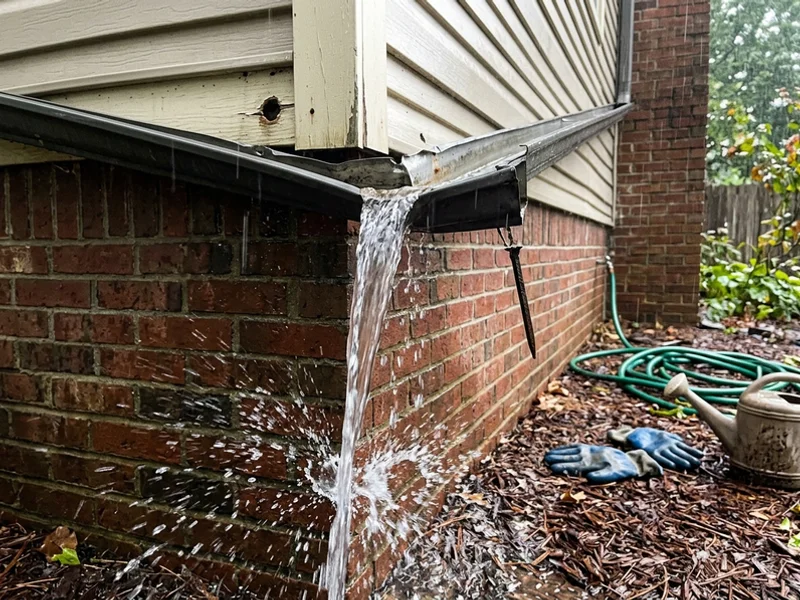
Bare, washed-out channels cut deeply into your mulch beds are a major red flag. These trenches provide a perfect map of where concentrated roof runoff has been violently landing. Our inspectors know that this exact spot is almost always where your worst basement leaks start.

Downspouts discharging at the wall

The industry standard “10-foot rule” says water must be moved at least that far from the house to be safe. Extensions cost very little upfront and prevent a truly great deal of structural damage. We consider this the most common, and luckily the most fixable, mistake homeowners make.

How This Connects to the Rest of the House

Homeowners usually reach out because they found water downstairs or smelled a musty odor. The roof drainage almost always turns out to be feeding both of those exact problems. We rarely get called out to a house just to look at the roofline.

You have to stop the exterior water source before sealing up the inside. Otherwise, trapped runoff will simply build up pressure against your new interior fixes. Our free inspection covers the entire picture, not just the single item you called about.

The ProblemThe Interior SolutionWhy Gutters Matter Here
Puddles on the floorbasement waterproofingCuts off the main exterior supply
70%+ summer humiditycrawl space encapsulationStops ground saturation
Cracked, bowing wallsfoundation repairRelieves hydrostatic pressure

Where interior water is already established, the inside system handles what has made it through. Meanwhile, the corrected gutters drastically cut off the supply from above. We coordinate all of these steps into one single, logical plan.

When years of concentrated water have already moved the footings, everything is scoped at the very same time. This ensures your home is permanently protected from top to bottom. Our approach tackles the dampness under the house by pairing targeted drainage with the right barrier.

The time to fix your exterior drainage is before the next heavy storm hits. Reach out for a free inspection today to see exactly what your home needs. We are ready to help you protect your biggest investment.
How Much Does Gutters Cost in Atlanta?

Gutter work is priced by linear footage, roof height and complexity, and how many downspouts and extensions are needed. Your free inspection produces a written quote, and financing is available.

Downspout & Drainage Fix

When the gutters are sound but the water is landing in the wrong place.

Smallest scope
  • check Downspout extensions routed clear of the foundation
  • check Discharge point selection and grading advice
  • check Free inspection of the full roofline
Get Your Exact Price

Gutter Replacement

Most common

Replacing failed, undersized, or sagging gutters.

Mid scope
  • check New gutter run sized for Georgia rainfall
  • check Correct pitch and secure fastening
  • check New downspouts and extensions
Get Your Exact Price

GutterShutter System

One-piece covered system for wooded lots that clog every season.

Full scope
  • check GutterShutter one-piece covered gutter system
  • check Clog-resistant hood design
  • check Heavy-duty mounting and full water diversion
Get Your Exact Price

What Changes the Price

  • arrow_right Total linear feet of gutter and number of corners
  • arrow_right Roof height, pitch, and access complexity
  • arrow_right Number of downspouts and required extension runs
  • arrow_right Fascia condition and any repair required before hanging
  • arrow_right Whether the system ties into existing drainage

Every quote is project-based and set after a free in-home inspection. Financing is available if you would rather spread the cost.

Why Choose Us for Gutters

verified_user

Foundation-first design

We size and route gutters to protect footings, not just to look tidy. Where the water lands matters more than the gutter itself.

layers

Built for pine straw

Atlanta's tree canopy fills open gutters fast. The GutterShutter covered design sheds debris so water keeps flowing.

map

One coordinated scope

If the same water is also causing basement seepage or crawl space humidity, one team scopes all of it in a single visit.

handyman

Correct pitch, secured properly

Most failed gutter runs were pitched wrong or under-fastened. We fix the fascia and hang it right the first time.

How Our Gutters Work Goes

01search

Free inspection

We walk the roofline, check pitch and fastening, look at where downspouts currently discharge, and note erosion at the foundation.

02assignment

Sizing and layout

You get a plan showing gutter capacity, downspout placement, and extension routing, priced per project in writing.

03engineering

Installation

Old gutters come down, fascia issues are addressed, and the new run goes up with proper pitch and heavy-duty mounting.

04task_alt

Water test

We run water through the system, confirm it discharges well clear of the footings, and clean the site before we leave.

Our Gutters Work

See the Difference

Before gutters Before
Before gutters
After gutters After
After gutters

Gutters on a metro Atlanta home

How Basement Waterproofing Atlanta Compares

Feature Typical provider Basement Waterproofing Atlanta
Design Open gutters plus drop-in screens One-piece covered GutterShutter system
Debris handling Screens clog with pine straw Hood design sheds debris
Downspout routing Discharges at the foundation Extended well clear of footings
Scope Gutters only Coordinated with drainage and waterproofing
Inspection Estimate from the driveway Free full-roofline assessment

What Customers Say About Our Gutters Work

star star star star star 4.8 from 1,200+ reviews
starstarstarstarstar

"We were cleaning gutters three times a year under all these pines. The covered system ended that, and the corner of the yard that always flooded is dry now."

Bill and Trish O. — Marietta

verified Verified homeowner review

starstarstarstarstar

"The team connected the dots between our overflowing gutters and the water in the basement. Fixed both. Should have called years ago."

Nicole D. — Decatur

verified Verified homeowner review

starstarstarstarstar

"Clean install, matched the trim, and the downspouts finally carry water past the flower bed instead of into it."

Emmanuel T. — Stone Mountain

verified Verified homeowner review

Gutters FAQs

How do gutters affect my foundation?

expand_more

A roof collects an enormous volume of water in a single Georgia storm. When gutters overflow or downspouts discharge at the wall, all of that lands in a narrow band of soil right against your footings. Expansive red clay absorbs it, swells, and presses against the foundation, which is exactly the hydrostatic pressure that drives basement leaks and contributes to wall movement. Full-envelope water management starts at the roofline because that is the cheapest place to control it.

What makes GutterShutter different from gutter guards?

expand_more

Drop-in guards and screens sit inside a conventional gutter and rely on debris blowing off. Under Atlanta's pine and oak canopy, pine straw mats down on top of screens and blocks water entirely. GutterShutter is a one-piece covered system: the hood and trough are a single unit engineered so water curls into the trough while leaves and needles shed off the edge.

How far should downspouts discharge from the house?

expand_more

As far as the lot practically allows, and always past the backfill zone. The soil immediately around a foundation was disturbed during construction and drains differently than undisturbed ground, so water dropped there soaks straight down to the footing. Extensions that carry water several feet out, or to a drainage point, keep it out of that zone entirely.

Do I need new gutters or just cleaning?

expand_more

Cleaning solves clogs. It does not solve sagging runs, wrong pitch, separated seams, undersized capacity, or rotted fascia. Our inspector tells you plainly which category you are in. If cleaning and a downspout extension will do it, that is what we will say.

Will covered gutters handle a heavy Georgia downpour?

expand_more

Yes, when sized correctly. Capacity is a function of trough size, downspout count, and pitch, so we size the system to your roof area and local rainfall intensity rather than defaulting to a standard run. Undersized gutters overflow in a hard rain no matter how clean they are.

Can gutters be installed alongside waterproofing work?

expand_more

That is often the ideal sequence. Managing roof water first reduces how much water ever reaches the soil around your foundation, and the interior drainage system then handles what remains. Scoping both at one inspection means the two systems are designed to work together instead of being retrofitted later.

What about erosion in my beds and along the foundation?

expand_more

Trenched channels in mulch beds and exposed soil against the wall are direct evidence of concentrated overflow. Once the gutter run is corrected and downspouts extended, the erosion stops. Your inspector will point out the erosion lines during the visit so you can see where the water has been going.

Still have questions?

A certified inspector can look at your home and answer them in person. The inspection is free and there is no obligation.

Book a Free Inspection

Ready to Book Gutters?

Free in-home inspection, transparent project-based pricing, and a transferable warranty on gutter services.

  • verified Transferable life-of-structure warranty
  • engineering Certified inspectors, not sales reps
  • payments Transparent pricing with financing options
event_available Book a Free Inspection