Our phones ring off the hook every time a heavy Georgia storm rolls through. Homeowners spot a new line in their basement wall and immediately assume they need more than a simple foundation crack injection. That fear makes sense when you live in a region that averages 50 inches of rain a year.
We frequently inspect these issues, and a large share of the cracks simply do not need underpinning. They just need to be properly understood and permanently sealed.
A precise foundation crack injection is often the exact repair your home requires.
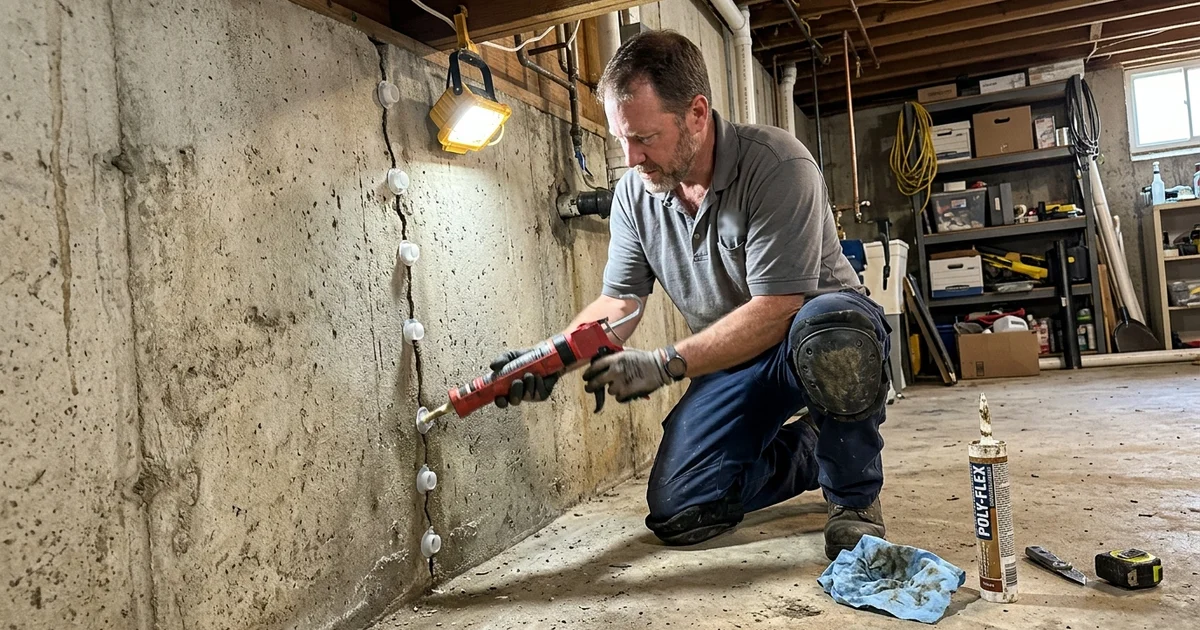
Our team installs surface ports along the fissure, seals the face, and injects resin under pressure to fill the entire depth of the wall. Executing this process correctly creates a permanent closure. Let’s examine when injection is the right call and when a crack points to structural issues that our foundation repair service must address.
Not Every Crack Means Piers
We start every evaluation by identifying the specific resin required for your unique situation. Epoxy and polyurethane are the two main options, and they serve entirely different purposes. Epoxy crack injection provides a rigid, structural foundation crack repair.
Our epoxy materials routinely test at 12,000 PSI compressive strength according to ASTM C881 standards. That rating makes the repaired section significantly stronger than your standard 3,000 PSI residential concrete. It creates an incredible bond that welds the two faces of the wall back together, but it requires a perfectly dry environment to cure.
Our approach shifts to polyurethane injection when dealing with active water intrusion. Polyurethane crack injection acts as a flexible water barrier rather than a rigid structural weld. The resin reacts with moisture inside the wall and expands up to 25 times its original volume.
We rely on this expansive action to fill irregular, jagged voids deep inside the concrete. This flexibility makes it the perfect solution for leaking basement walls or areas where minor seasonal temperature shifts might compromise a rigid patch. The blockquote below summarizes the essential difference.
The distinction that matters
Our teams know that epoxy restores strength while polyurethane stops water. Choosing based on whether the crack is wet, rather than on which one sounds stronger, is what makes the repair last. This simple rule prevents countless failed repairs.
| Resin Type | Primary Function | Key Characteristic | Ideal Application |
|---|---|---|---|
| Epoxy Injection | Structural welding | 12,000 PSI strength | Dry, stable, non-moving cracks |
| Polyurethane Injection | Waterproofing | Expands 25x in volume | Wet, leaking, or actively shifting cracks |
When Injection Is the Right Answer
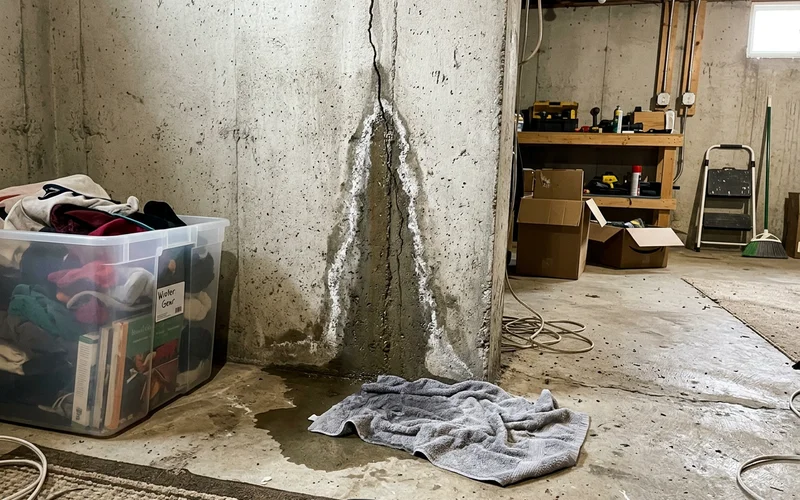
We usually recommend an injection-only approach for vertical or near-vertical cracks in poured concrete. The two sides of the crack must remain perfectly flush with zero inward displacement. You also need to confirm that the gap width has stayed consistent throughout seasonal temperature changes.
Our field measurements must also verify that the floor elevations across your home show no meaningful slope. That specific combination of factors points directly to standard concrete shrinkage. Concrete naturally releases water and contracts as it cures during construction.
We see these shrinkage artifacts frequently in long basement walls. The wall simply relieves its internal curing stress by cracking in a vertical line. This marks an original construction artifact, not a serious soil settlement problem.
Our sealing process closes this specific type of gap permanently. Leaking vertical cracks generally fall into this exact same category. Water simply uses the crack as the path of least resistance through the concrete.
We look for these four green lights before recommending a standalone injection:
- Vertical or diagonal crack lines.
- Smooth and flush concrete surfaces.
- Openings narrower than 1/8 inch.
- Minor seepage during heavy rain.
Meeting all these criteria confirms that you have a stable structure. The repair process becomes incredibly straightforward at this stage.
When a Crack Is Telling You More
We also sound the alarm when one side of the crack pushes inward relative to the other. A simple injection becomes the wrong repair choice when you spot horizontal fracturing across a block wall. Stair-step cracks zigzagging through brick mortar joints represent another massive red flag.
Our Atlanta service area sits directly on top of dense Piedmont red clay. These symptoms indicate that the wall is actively failing under external pressure. This highly expansive soil absorbs massive amounts of water during spring rains and pushes laterally against your basement walls.
We install structural solutions like carbon fiber straps or steel wall anchors to halt that inward movement. Sealing a horizontal block crack does absolutely nothing to stop that immense outside force. Stair-step cracking points to a footing that is sinking unevenly into the soil.
We encourage you to read more about this settlement signature in our signs of foundation problems guide. Homeowners often miss the subtle failure of a “sealing-first” approach applied by amateur handymen. The sealed gap looks fixed, so you naturally stop monitoring the wall.
Our repair crews eventually get the call when the shifting foundation takes the exterior brick or interior framing down with it. The structural movement continues quietly behind the scenes for two or three more seasons before becoming catastrophic. That delayed reaction makes proper diagnosis absolutely critical.
Measuring the Real Problem
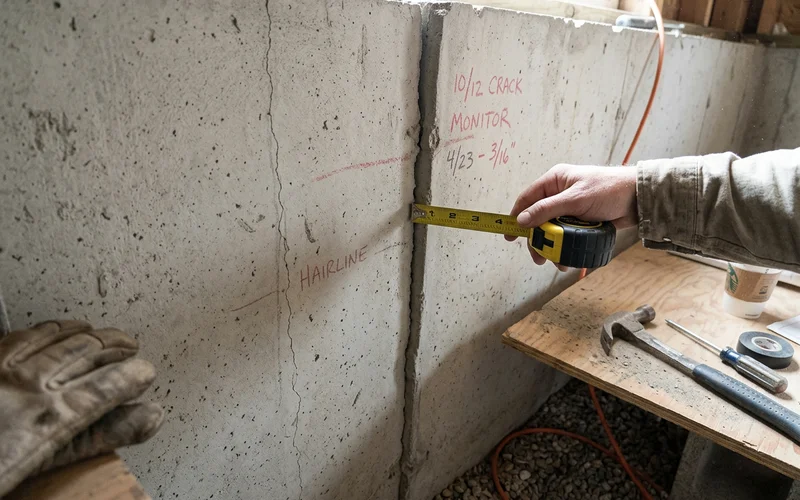
We provide detailed structural assessments to give you total clarity. A certified inspector measures actual data instead of guessing. A proper inspection maps the exact crack width, wall displacement, and moisture levels at the footing line.
Our specialists are ready to schedule your free foundation evaluation today.
If the data confirms a simple shrinkage crack, you receive a permanent seal. Knowing your exact structural status protects your largest investment.